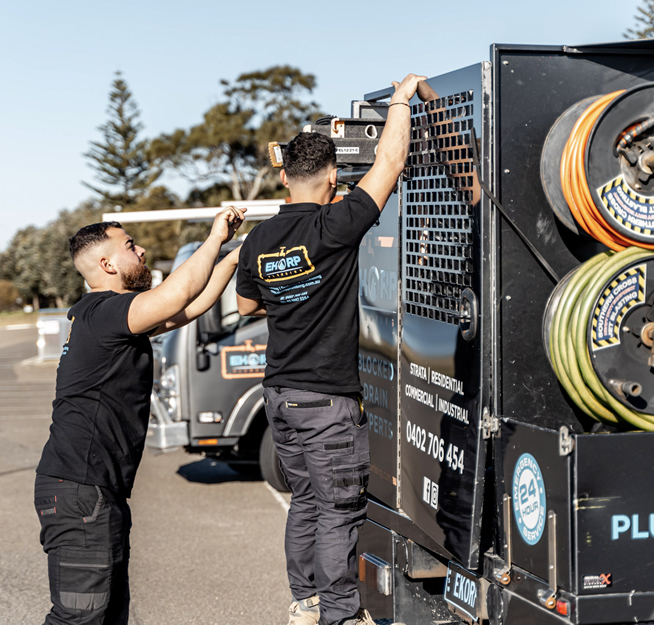


A Step-by-Step Guide for Sydney Homeowners: Handle a Burst Pipe Before Help Arrives
A burst pipe can dump hundreds of litres of water through your home in a matter of minutes. Walls, floors, carpets, electrics, all at risk. The good news is that the first few minutes are yours to control, and getting those right makes a huge difference to your repair bill.
This guide covers how to spot the warning signs, the exact steps to take while you wait for the plumber, how to keep damage to a minimum, and what causes pipes to go in the first place. EKORP Plumbing (Lic 322223C) is available 24/7 across St George, Sutherland Shire, and Georges River, with arrivals in around 60 minutes and no callout fee.
Signs You Have a Burst Pipe
A burst isn’t always a gusher through the wall. Watch for these signals:
Clear Signs of a Burst Pipe
- Pressure drop out of nowhere, taps go from full flow to a trickle for no reason.
- Water pooling where it shouldn’t, puddles under sinks, wet patches on floors, or water seeping through walls.
- Stains or bubbling on ceilings and walls, paint bubbles and brown water marks are a giveaway.
- Strange pipe noises, hissing, banging, or gurgling from behind walls.
- Water bill that’s jumped sharply, a hidden burst can waste thousands of litres before you notice.
Why Quick Action Matters
Water doesn’t wait. The longer a burst runs, the further it travels through your floors, into the subfloor, and up your walls. Mould can start forming within 24 to 48 hours, and water near wiring is a serious electrocution risk. Treat any of these signs as an emergency.
What to Do Immediately After a Burst Pipe
Work through these steps in order. Don’t skip ahead.
Step 1, Shut Off the Main Water Supply
- Find your water meter, usually near the front boundary in a small box set into the ground or kerb.
- Turn the stop valve clockwise until it won’t move.
- This cuts the flow and stops more water entering the house.
Step 2, Turn Off Electricity if Water Is Near Power
- If there’s water close to power points, the fuse board, or any appliance, head to your main switchboard and kill the power to that part of the house.
- Never wade through water that might have live current running through it. Get out and call 000 if you’re unsure.
Step 3, Drain Remaining Water from Taps
- Open cold taps at the kitchen and laundry to drain what’s left in the pipes.
- Flush a toilet once to relieve any remaining pressure.
Step 4, Contain the Leak
- Put buckets and old towels under the burst point to catch drips.
- If you can safely reach the pipe, a pipe clamp, a strip of rubber secured with duct tape, or some epoxy putty can slow things down temporarily.
- These fixes are short-term only, they won’t hold once full pressure is restored.
Step 5, Call an Emergency Plumber
- Once things are contained, call a licensed plumber straight away.
- EKORP Plumbing is on call 24/7, with no callout fee and typical arrival within 60 minutes across St George, Sutherland Shire, and Georges River.
- Call now on 02 8667 5354.
How to Minimise Water Damage Before the Plumber Arrives
Mains off, leak slowed, now focus on protecting your home and belongings.
Steps to Reduce Water Damage
- Move valuables fast, get furniture, electronics, and anything irreplaceable away from wet areas.
- Mop up standing water straight away, a wet vacuum is ideal; towels and mops work too. The longer water sits, the worse the damage.
- Get air moving, open windows and doors, run fans, and use a dehumidifier if you have one.
- Take photos and video, document everything before you start cleaning up. Your insurer will want evidence.
Why It Matters
Water moves fast through timber floors, plasterboard, and subfloor framing. Acting early can cut thousands off the final repair bill and stop mould from taking hold.
When to Call Emergency Services (Not Just a Plumber)
A licensed plumber handles most burst pipe situations, but some calls need more than a plumber.
When to Call Fire and Rescue NSW
- Water is flooding near power outlets, wiring, or the switchboard.
- Any risk of electrocution, evacuate and call 000 right away.
When to Call Sydney Water
- The burst is on the water main outside your property boundary.
- Sydney Water owns and repairs public water infrastructure, they’ll send a crew.
When to Call the Emergency Gas Service
- The burst has damaged a gas line, or you can smell gas in the area.
- Leave the property immediately and call your gas provider’s emergency line.
For everything inside your boundary, EKORP’s 24/7 team is your first call on 02 8667 5354.
Causes of Burst Pipes in Sydney Homes
Most burst pipes have one of a handful of causes, and understanding them can help you avoid the next one.
Common Causes of Burst Pipes in Sydney
- Old or corroded pipes, copper and galvanised steel weaken with age and crack under normal pressure.
- Tree root intrusion, roots chase moisture into underground lines, splitting or collapsing them from the inside.
- High water pressure, pipes fail at their weakest point when pressure runs consistently too high.
- Temperature swings, Sydney’s summer heat spikes and cooler winters stress pipes that are already worn.
- Ground movement or nearby construction, soil shifts and drilling can crack or displace underground pipework.
Why It Matters
Catching these issues early with a routine inspection costs far less than dealing with a burst. Regular checks also flag corroded sections before they fail.
Burst Pipe Repair Options
The right repair depends on what’s failed and where. Here’s how they break down.
Temporary DIY Fixes
- Pipe clamp, clamp over the split section to cut the flow while you wait.
- Epoxy putty, press it around small cracks for a short-term seal.
- Rubber and tape wrap, cut a strip from an old hose, press it over the leak, and bind it tightly with duct tape.
None of these hold under full mains pressure. They buy you time, nothing more.
Permanent Professional Repairs
- Section replacement, the damaged length is cut out and replaced with new pipe. Best for badly corroded or collapsed lines.
- Pipe relining, a resin liner is fed into the existing pipe and cured in place, forming a new pipe inside the old one. No digging required, ideal for underground or hard-to-reach runs.
How to Prevent Burst Pipes in the Future
A few simple habits go a long way toward keeping your pipes intact.
Preventative Tips
- Book a plumbing inspection every year or two, a licensed plumber spots trouble before it becomes an emergency.
- Check your water pressure and fit a pressure-reducing valve if it’s running high.
- Insulate pipes in exposed spots, under the house, or outdoors.
- Keep drains and stormwater lines clear to prevent pressure build-up.
- Replace ageing copper or galvanised pipes before they give way.
Why Prevention Saves Money
A pipe inspection or an upgrade to a worn section costs a fraction of the water damage bill that follows a major burst. Sorting it early also means no middle-of-the-night emergency call-outs.
FAQs, Burst Pipe Emergencies
How long can I leave a burst pipe unattended?
Not long at all. Even a small split can push out hundreds of litres per hour. Shut the mains and call a plumber straight away.
Will insurance cover water damage from burst pipes?
In most cases, yes. Home and contents policies generally cover sudden, accidental water damage, though not gradual leaks from ongoing neglect. Document everything with photos and video before you start cleaning up.
How quickly can an emergency plumber get to me in Sydney?
EKORP’s team typically arrives within 60 minutes across St George, Sutherland Shire, and Georges River. We’re available 24/7 with no callout fee.
What’s the average cost of burst pipe repair?
- Temporary patch: $150 to $300
- Permanent pipe replacement: $500 to $2,000 or more, depending on access and pipe condition
For upfront pricing and fast response, call EKORP Plumbing on 02 8667 5354. We’re available around the clock, seven days a week, with no callout charge and a licensed team (Lic 322223C) ready to protect your home.