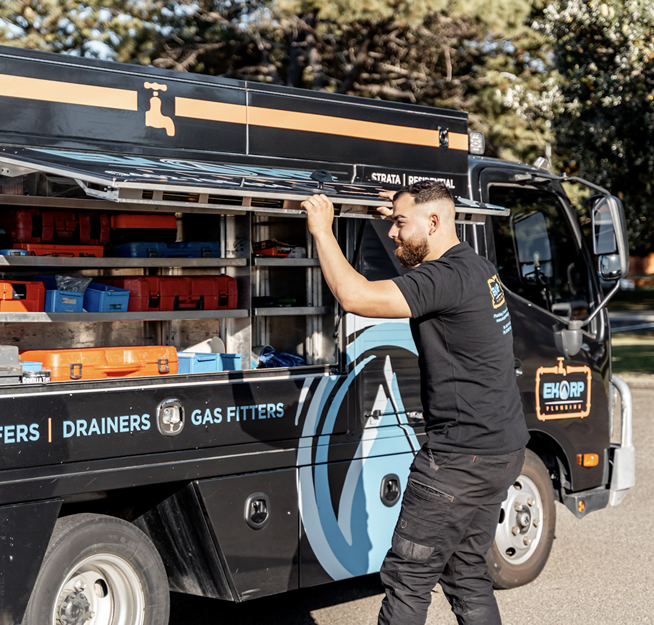
Commercial pump installation, service and repair across Sydney. Submersible, sewage, booster, stormwater and macerator pumps. 24/7. Lic 322223C. Call 02 8667 5354.


EKORP Plumbing are licensed drainage specialists (Lic 322223C, MPA NSW) covering St George and the Sutherland Shire. We deal with easement compliance, council coordination, runoff disputes with neighbouring properties, civil drainage upgrades and AS/NZS 3500.3 certification for building owners, body corporates and property managers. Available 24/7 with a 60-minute emergency response. Call 02 8667 5354.
 Licence 322223C | MPA NSW
24/7 Emergency Response
$0 Call-Out Fee
60 Min Response Time
AS/NZS 3500.3 Compliant
Licence 322223C | MPA NSW
24/7 Emergency Response
$0 Call-Out Fee
60 Min Response Time
AS/NZS 3500.3 Compliant


Every building owner and body corporate whose title carries a stormwater easement has legal obligations that run with the land. Understanding what those obligations are is the starting point for avoiding council enforcement action and disputes with neighbouring properties.


Commercial stormwater easements sit at the intersection of property law, civil engineering and local government regulation. Getting the compliance picture right protects your investment and keeps your development approvals intact.
Effective easement design for commercial sites requires hydraulic engineering, knowledge of AS/NZS 3500.3 and an understanding of how your drainage connects to the broader council network. Our engineers deliver designs that pass council review first time.


Civil-scale stormwater easement construction on commercial sites requires coordinated approvals, experienced excavation crews and on-site inspection at every stage. EKORP manages the full process from council approval through to final sign-off.

Ongoing maintenance of commercial stormwater easements is not optional. It is a condition of the easement deed and a requirement under council planning instruments. Neglected easements accumulate debris, erode and ultimately fail during heavy rainfall events, creating liability for the responsible owner or body corporate.
Commercial easement maintenance is not a job for a general gardener or building maintenance contractor. It requires a licensed plumber with civil drainage experience who understands what the easement deed requires and how the infrastructure should be performing. EKORP provides scheduled and reactive maintenance programmes tailored to your site.
Our commercial drainage team operates across St George and the Sutherland Shire, with rapid access to wider Sydney for larger civil projects. If your suburb is not listed below, call 02 8667 5354 to confirm availability for your site.
Building owners and body corporates across the Sutherland Shire and St George area trust EKORP to keep their commercial stormwater easements compliant and performing. Here is what a few of them had to say.


“Their professionalism has been outstanding. The team was punctual, courteous, and efficient. Despite it being a particularly messy job, the worksite was left spotless. I can’t fault their service and would happily recommend them to anyone looking for reliable plumbers.”


Commercial sites present drainage challenges that are fundamentally different from residential properties. High site coverage, multiple tenancies, body-corporate governance and ageing infrastructure combine to create complex easement problems. EKORP has the civil drainage experience to resolve them.
Modern commercial drainage engineering goes beyond basic compliant pipes. The right solution for your site may combine underground storage, smart flow monitoring and water reuse to reduce council charges, satisfy green star requirements and future-proof your drainage against increasingly intense Sydney storm events.
A stormwater easement is a registered encumbrance on the title that affects what you can build, how much your site is worth and what you must disclose when you sell. Understanding the legal dimension before you develop, modify or sell protects you from costly surprises.
Stormwater easement disputes between commercial property owners, body corporates and neighbouring properties are among the most disruptive and expensive issues a building manager can face. EKORP provides the technical evidence and remediation planning that your solicitors need to resolve these disputes efficiently.
The questions below address what we hear most often from commercial building owners, body corporates and property managers about stormwater easement obligations in Sydney. Call 02 8667 5354 if your question is not covered here.
A commercial stormwater easement is a legally designated area on your property title reserved for managing stormwater runoff. It grants the council or a downstream lot owner the right to access this corridor for drainage purposes. Within the easement you cannot erect permanent structures, significantly modify ground levels or obstruct the flow path without council consent. The easement runs with the land, so it binds every future owner. On the positive side, a compliant and well-maintained easement protects your building from upstream flooding and reduces your liability if a drainage failure damages a neighbouring property.
Registered easements appear on your property’s certificate of title, on the registered survey plan and in the council’s property information certificate. You can also check the Section 10.7 Planning Certificate issued by your local council. For commercial properties, a title search through NSW Land Registry Services will list all registered interests including stormwater easements. If the documents are unclear, our drainage team can review the title and survey plan, cross-reference it with council drainage maps and provide a written summary of exactly where the easement sits on your site and what it requires of you.
Within a commercial stormwater easement you typically cannot: construct buildings or footings; install deep-rooted trees or permanent landscaping features; alter ground levels or contours without council approval; place fencing that blocks water flow or prevents maintenance access; or store goods, equipment or waste. The specific restrictions depend on the easement type and the council’s engineering requirements. Piped drainage easements generally allow hardstand pavement above the pipe, subject to load rating requirements. Overland flow path easements often prohibit any filling or obstruction. Our team reviews your specific easement configuration and gives you a clear list of permitted and prohibited activities.
Responsibility is typically shared between the property owner or body corporate and the council. The property owner is responsible for keeping the easement corridor clear of obstructions, maintaining surface drainage features and carrying out minor repairs to private drainage assets within the easement. The council maintains principal drainage lines that it owns within the easement. In a strata commercial building, the body corporate is generally responsible for common property drainage including shared easements. The easement deed and the council’s development consent conditions set out the specific division of responsibility for your site.
Building over a stormwater easement is generally prohibited without formal council consent. In some circumstances councils permit pavement, car parking or lightweight structures over buried pipes, provided the structural loads are within approved limits and access for maintenance is maintained. Any modification requires a development application or, at minimum, a works-in-kind approval, supported by engineering drawings. Our team designs compliant structures over easements where the council will permit them, and prepares the technical documentation needed for the approval application. Proceeding without consent risks council orders to demolish the work at your cost.
Relocating a stormwater easement involves: commissioning hydraulic engineering plans showing the existing and proposed drainage arrangements; demonstrating to council that the new alignment maintains or improves drainage capacity; obtaining written consent from all parties with an interest in the easement; lodging a formal council application or a Land and Environment Court application if consent is refused; constructing the new drainage infrastructure to council specification; and registering the new easement while extinguishing the old one at NSW Land Registry Services. The process typically takes four to eight months depending on the council and the complexity of the drainage network. EKORP prepares the engineering component and coordinates with your solicitor and surveyor.
Required easement widths for commercial sites are set by the local council’s engineering specifications and depend on pipe diameter, design flow volume, maintenance vehicle access requirements and the type of drainage infrastructure present. Small piped systems may require only 1.5 metres of width, while major drainage channels or large-diameter pipes carrying significant catchment flows may require five metres or more. Overland flow path easements are typically wider again to accommodate the design flood envelope. Our hydraulic engineers calculate the correct width for your system as part of the design process and confirm this with the council before the DA is lodged.
Unauthorised structures within a stormwater easement need to be addressed promptly. Options include applying for retrospective approval if the structure does not compromise drainage function; modifying or removing the structure to restore the easement; or applying to relocate the easement where the existing alignment is genuinely impractical. Ignoring the situation risks council enforcement notices, fines and personal liability for any downstream flooding caused by the obstruction. EKORP assesses the drainage impact of the encroachment, advises on the most practical compliance pathway and prepares the engineering documentation needed for any council application.
A stormwater easement can reduce the developable area of a commercial site and may limit the gross floor area that can be achieved, which affects assessed value. However, properties with properly maintained easements and documented compliance histories are easier to insure and easier to sell than those with easement issues. Flood insurance premiums for commercial properties with compliant drainage infrastructure are generally lower than for properties with unresolved drainage compliance issues. When an easement dispute or a council enforcement matter is on record, it must be disclosed to purchasers and can result in significant price adjustments. Proactive easement management is therefore also a property asset management strategy.
Maintain a drainage compliance file covering: the registered easement documents from your property title and survey plan; all council correspondence relating to the easement; the original engineering drawings and hydraulic calculations; development consent conditions that reference stormwater management; inspection and maintenance records, including CCTV reports; contractor invoices for all drainage works; any modification approvals or council sign-off letters; and photographs documenting easement condition at regular intervals. This documentation demonstrates compliance to purchasers, insurers, councils and courts. EKORP provides written records for every maintenance and inspection visit, formatted to sit in your compliance file alongside the title documents.
For commercial stormwater easement compliance, design, installation, maintenance and dispute support across St George and the Sutherland Shire, contact EKORP Plumbing on 02 8667 5354. Our licensed drainage team is available 24/7. After-hours rates apply for evening, weekend and public holiday call-outs and are confirmed before we dispatch.
Don’t let a plumbing issue disrupt your day. Contact our local experts now for fast, reliable service across Sydney’s Southern Suburbs.

Speak directly with our team

Emergency service when you need it

Serving Sydney’s South
Commercial easement work requires licensed professionals with civil drainage experience. Here is what underpins every project EKORP delivers.