

How to Fix a Leaking Tap (Sydney Homeowner Guide)
That drip-drip-drip coming from your tap is more than just annoying. A leaking tap in Sydney is burning through your water budget and wearing down your fixtures. The good news is that a lot of leaking tap repairs come down to a worn washer, a tired O-ring, or a faulty ceramic cartridge. With a few basic tools and a bit of patience, you can often sort it yourself. The trick is knowing which type of tap you have and when to call a licensed plumber instead.
Why Fixing a Leaking Tap Matters
Water Wastage and Higher Bills
A tap dripping once per second wastes around 20,000 litres of water a year. That is enough to fill a small pool, and it shows up quarter after quarter on your Sydney Water bill. A few dollars spent on a new washer pays for itself pretty fast.
Damage to Fixtures and Surfaces
Constant moisture leaves stains on your sink, corrodes chrome fittings, and can push mould into the grout around the base of the tap. Left alone long enough, it can rot the cabinetry under the sink too.
Environmental Impact
Sydney takes water conservation seriously. Fixing a leaky tap at home is one of the easiest ways to do your bit while keeping a few extra dollars in your pocket each quarter.
Step 1: Identify What Type of Leaking Tap You Have
Different tap types need different fixes. Work out what you have before you reach for the spanner.
Traditional Washer Taps (Separate Hot and Cold)
These are the classic two-handle taps you find in older Sydney homes. Turn clockwise to close, anti-clockwise to open. Inside, a rubber washer presses against a valve seat to stop the flow, and O-rings keep the spindle sealed. When the washer gets squashed, cracked, or hard with age, you get a drip from the spout.
Mixer Taps (Single Lever)
Modern kitchens and bathrooms across Sydney mostly have mixer taps now. One lever controls both flow and temperature using a ceramic disc cartridge. When that cartridge wears out or picks up debris, you get leaks. The catch with mixer taps is that you need the exact cartridge for your brand and model. Generic ones rarely do the job properly.
Where Is the Leak Coming From?
- Dripping from the spout: Worn washer in a traditional tap, or a faulty ceramic cartridge in a mixer tap.
- Leaking around the handle or base: O-rings or body seals have given up. These can be replaced.
- Leaking under the sink or inside the wall: That is a pipe or hose connection issue. Stop there and call a licensed plumber. This is not a DIY job.
Step 2: Gather Tools and Turn Off the Water
Get everything ready before you start pulling things apart.
Required Tools and Materials
- Adjustable wrench or spanner (two sizes are handy)
- Flathead and Phillips screwdrivers
- Replacement tap washers in the right size, or a ceramic cartridge for mixer taps
- O-rings in various sizes (grab a mixed pack)
- PTFE plumber’s tape
- Clean rag or towel
- Small bucket or container
Turning Off the Water Supply
- Check under the sink for isolation valves on the hot and cold pipes. Turn them clockwise to shut off water to just that tap.
- If there are no isolation valves, you will need to turn off the main supply at the water metre out the front of the property.
- Once the water is off, open the tap fully to drain whatever is left in the line and release pressure. Keep your bucket handy.
- Confirm the flow has stopped completely before touching anything else.
Important: If you cannot fully stop the water flow, do not proceed. Call a licensed plumber to sort the isolation valve first.
How to Fix a Leaking Washer Tap (Traditional Hot/Cold Taps)
Work on one tap at a time so you can use the other as a reference if you lose track of where things go.
Remove the Handle and Cover
Look on top of the handle for a small cap marked H or C. Pop it off with a flathead screwdriver. Remove the screw underneath, noting that hot tap screws are reverse-threaded. Lift the handle straight off. If there is a decorative skirt below it, unscrew that too.
Remove the Tap Bonnet and Spindle
Use your wrench on the hexagonal bonnet nut and turn it anti-clockwise. Wrap a cloth around it first to protect the chrome. Once loose, unscrew it by hand and lift out the whole spindle assembly. You can now see the valve seat at the bottom of the tap body.
Replace the Washer and O-Rings
At the base of the spindle sits the rubber washer, held by a small brass screw. Remove the screw, swap the old washer for a new one that fits snugly, then check the O-rings on the spindle body. If they look flattened or cracked, replace them too. A dab of plumber’s grease on the new O-rings helps them seat properly.
Check and Clean the Valve Seat
Run your finger across the valve seat inside the tap body. It should feel smooth. If it is rough, pitted, or corroded, no new washer will seal against it. Light roughness can sometimes be sanded back, but a badly damaged seat usually means the tap needs professional reseating or full replacement.
Reassemble the Tap
- Slide the spindle back in with the new washer fitted.
- Thread the bonnet nut on by hand, then snug it up a quarter turn with the wrench. Do not overdo it.
- Reattach any decorative skirt, then the handle, then the cap.
Turn Water Back On and Test
Slowly open the isolation valve and watch for any drips around the tap body as pressure comes back up. Open and close the tap a few times. It should move smoothly and shut off without any dripping. Still dripping from the spout? The washer may not be seated right, or the valve seat is damaged. Leaking around the handle? Tighten the bonnet nut a touch or swap the O-rings.
How to Fix a Leaking Mixer Tap (Single Lever)
Mixer taps take a bit more care. The steps vary between brands, so check the manual if you have it.
Identify Your Tap Brand and Model
Look for a brand name or logo on the tap body. You need this to find the right replacement ceramic cartridge. Cartridges are not interchangeable between brands, and often not between models within the same brand.
Remove the Handle
Most mixer handles hide a small grub screw under a decorative cap. The cap may be colour-coded red or blue, or it might match the chrome. Pry it off or unscrew it, remove the grub screw with an Allen key or small screwdriver, and lift the handle straight up.
Remove the Cartridge
The ceramic cartridge sits under the handle, secured by a retaining nut, clips, or a threaded collar depending on the model. Remove whatever holds it in place, then pull the cartridge straight out. Note which way it is oriented. The new one must go in the same way or your hot and cold will be backwards.
Install the New Cartridge
Take the old cartridge to a plumbing supplier so you can match it exactly. Fit the new one in the same orientation, line up any alignment tabs or pegs, and secure it with the retaining mechanism. Put the handle back on, turn the water on, and test through the full range of motion for both flow and temperature.
When DIY Is Not Worth It for Mixer Taps
If you cannot find the brand, cannot source the right cartridge, or the leak keeps going after a cartridge swap, hand it over to a professional. Licensed plumbers have supplier access and hands-on experience across dozens of tap brands. They often get it done faster than a drawn-out DIY attempt.
When to Call a Professional Plumber Instead of DIY
- Hidden or under-sink leaks: Anything coming from pipes rather than the tap itself needs professional diagnosis.
- Damaged valve seat: A new washer alone will not fix this. A plumber can reseat it or advise on replacement.
- Cannot source the cartridge: Licensed plumbers have access to supplier networks for specialist parts.
- Corroded or seized fittings: Forcing old, stuck parts risks breaking the tap or the pipe behind it.
- Multiple taps dripping at once: This can point to a water pressure problem rather than individual tap failure.
- Wall-mounted or concealed taps: Getting into the wall means tiles and waterproofing are involved. Leave it to the pros.
- You are not confident: A botched repair can cost more to fix than the original plumber callout would have.
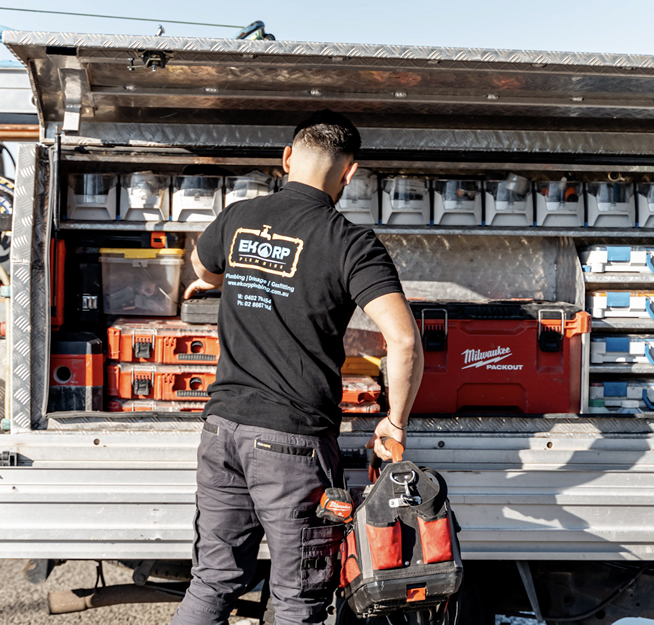
EKORP Plumbing handles all types of tap repairs across St George, Sutherland Shire, and the Georges River area. We carry common parts on the truck and can source cartridges for most major brands, getting most jobs done in a single visit. If your taps are past the point of repair, we also handle full tap replacements as part of bathroom and kitchen renovations.
How to Prevent Future Leaking Taps
- Do not overtighten: Once you feel resistance when closing a tap, that is enough. Grinding it shut compresses the washer and damages the valve seat over time.
- Fix drips early: A small drip erodes the valve seat and stresses other components. Fix it fast and you avoid a bigger repair later.
- Check your water pressure: If multiple taps keep springing leaks or your pipes bang and gurgle, high water pressure may be the cause. A plumber can fit a pressure regulator.
- Use quality parts: Cheap washers fail sooner. A slightly pricier washer or O-ring set from a reputable plumbing supplier lasts much longer.
- Clean aerators regularly: Sediment build-up in the aerator at the end of the spout affects flow and can cause drips. Unscrew it every few months and rinse it out.
FAQs About Fixing a Leaking Tap
What is the most common cause of a leaking tap?
In traditional taps, it is almost always a worn rubber washer. The washer compresses against the valve seat thousands of times over its life and eventually flattens, hardens, or cracks. In mixer taps, the ceramic disc cartridge wears from friction or gets damaged by debris in the water. Both are inexpensive to fix when caught early.
Can I fix a leaking tap myself?
Traditional washer taps are generally fine for a confident DIYer with basic tools. Mixer taps are trickier because you need the exact replacement cartridge for your brand and model. Leaks under the sink or inside walls are never DIY territory. If a straightforward washer swap does not stop the drip, call a licensed plumber rather than pulling more things apart.
How much water does a dripping tap waste?
A tap dripping once per second loses around 20,000 litres per year. That shows up on your Sydney Water bill every quarter. The cost of a new washer or a plumber visit is usually recovered in water savings within a couple of months.
Do I need to turn the water off to change a tap washer?
Yes, absolutely. Working on a tap with live water pressure will cause an immediate flood. Always shut off at the isolation valve under the sink, or at the main supply if there is no isolation valve. After shutting off, open the tap to drain the line and release pressure before you start pulling things apart.
How do I know if I should replace the whole tap?
Consider a full replacement if the tap is heavily corroded, keeps developing new leaks after repairs, no longer matches a bathroom or kitchen you are renovating, or if parts are no longer available. A licensed plumber can give you an honest assessment of whether repair or replacement makes better financial sense for your situation.
Stop That Drip and Save Water and Money
A leaking tap in Sydney is not just a nuisance. It wastes thousands of litres of water, inflates your bills, and can quietly damage fixtures and cabinetry over time. Identifying your tap type first, whether it is a traditional washer tap or a modern mixer tap, sets you up for a successful repair. For washer taps, a straightforward swap of the rubber washer and O-rings will fix most drips. For mixer taps, take the time to source the exact replacement cartridge before you start.
Work carefully, always turn the water off first, and use good-quality replacement parts. If anything looks seized, corroded, or beyond a simple washer swap, do not push it. Call a plumber before a small job turns into a big one.
EKORP Plumbing provides tap repairs and replacements across St George, Sutherland Shire, and Georges River. We offer 24/7 availability, a 60-minute response, $0 callout fee, and carry parts on the truck to get most repairs done in one visit. Our licence number is 322223C. Give us a call on 02 8667 5354 and we will get that drip sorted for you.